Thursday, 23 May 2024

Gov Yusuf Assents To Bill Reversing Creation Of Kano Emirates Created By Ganduje


Gov Yusuf Assents To Bill Reversing Creation Of Kano Emirates Created By Ganduje

The governor also reinstated the 14th Emir of Kano, Muhammadu Sanusi II, who was earlier deposed in March 2020.

Governor Abba Yusuf signs into law a bill reversing the creation of Kano emirates by the administration of former Governor Abdullahi Ganduje on Thursday, May 23, 2024


Kano State Governor, Abba Yusuf, has assented to the bill earlier passed on Thursday by the state assembly which reversed the creation of new emirates by the then Governor Abdullahi Ganduje administration.

The governor assented to the bill on Thursday after a closed-door meeting with the members of the state assembly and some traditional leaders believed to be kingmakers at the Government House in Kano.

Yusuf also reinstated the 14th Emir of Kano, Muhammadu Sanusi II, who was earlier deposed in March 2020. With the governor’s proclamation, Emir Aminu Ado Bayero, who initially succeed Sanusi, has been removed.


Emir Ado Bayero was said to be currently out of town after he paid a courtesy call on Oba Sikiru Adetona, Awujale of Ijebuland, on Wednesday.

Sanusi, a former governor of the Central Bank of Nigeria (CBN), was appointed as the 14th Emir of Kano in June 2014 by the administration of former governor Rabiu Kwankwaso, with Ganduje as deputy governor of the state before the latter eventually became governor in May 2015.

As Kano emir, Sanusi fell out with the Ganduje administration over his outspoken nature.

He was deposed in March 2020 after the Kano State Emirs (Appointment and Deposition) Law was promulgated by the Ganduje administration in 2019, and four additional emirates were created – Rano, Karaye, Gaya, Bichi.

The then state government said he was removed “to safeguard the sanctity, culture, tradition, religion and prestige of the Kano emirate,” accusing the emir of “total disrespect” of institutions and the governor’s office.

But Sanusi’s supporters believed he was ousted for opposing Ganduje’s re-election in 2019.

Upon securing a second term mandate, Ganduje split the Kano emirate into five and appointed four more emirs – to weaken Sanusi’s influence.

Five years after his controversial removal as emir, the Kano State House of Assembly resolved to amend the law after Majority Leader Hussien Dala moved the motion during plenary.

“The need to revisit the Emirs Law has become imperative to address the issues that have arisen from the 2019 amendment. We must ensure that our traditional institutions are governed by laws that reflect fairness and justice,” Dala said.

On his part, the Speaker of the Kano House of Assembly, Jibril Isma’il Falgore, promised to ensure that the process of amendment follows due process and transparency.

The law that booted Sanusi from office is known as the Kano State Emirs (Appointment and Deposition) Law. It was promulgated in 2019 by the Ganduje administration after having a running battle with the deposed emir.

Now, the parliament is controlled by the opposition New Nigeria Peoples Party (NNPP).

Earlier, NNPP 2023 presidential candidate (Kwankwaso) pledged that the issue of Sanusi’s sack would be revisited. Kwankwaso, the political mentor of the current governor, controls Kano, the north-western state known for its huge voting population.


Tinubu Directs Review Of Governing Boards Of Tertiary Institutions


Tinubu Directs Review Of Governing Boards Of Tertiary Institutions

According to the Presidency, the review will also take into consideration national spread and ensure every part of the country is adequately represented

File photo of President Bola Tinubu

President Bola Tinubu has directed a total and comprehensive review of the recently announced governing boards of tertiary institutions in Nigeria before the inauguration and retreat being planned for the nominees.

The Federal Ministry of Education recently released names of nominees for chairmen, Pro-Chancellors, and members of the boards and councils of universities, Polytechnics, and colleges of education.

It also announced that the inauguration and retreat for the nominees will take place on 31 May.

READ ALSO: FG Constitutes Governing Councils Of Federal Tertiary Institutions

However, the Special Adviser to the President on Information and Strategy in a statement on Thursday, said public reactions showed that the nominations did not reflect the federal character of the country as some states got just one nomination, while some others got many.

“In directing a complete review of the list of members, President Tinubu acknowledges the feedback across the country.

“President Tinubu is committed to ensuring strict compliance with the principle of federal character as entrenched in the constitution,” Onanuga said.

He added that the review will also take into consideration national spread and ensure every part of the country is adequately represented.

The Bauchi zone of the Academic Staff Union of Universities (ASUU), had on Tuesday, criticized the appointment of governing boards across Federal Tertiary Institutions.

They said it was better for the Bola Tinubu-led administration to reinstate the earlier dissolved members.

Tinubu, Seven Other African Leaders Attend Déby’s Inauguration As Chad’s President


Tinubu, Seven Other African Leaders Attend Déby’s Inauguration As Chad’s President 

Eight African heads of state as well as Constitutional Council members and hundreds of guests watched as the 40-year-old, dressed in his customary white boubou, was inaugurated as president at the Palace of Arts and Culture in the capital N'Djamena.


President Bola Ahmed Tinubu attends the Inauguration of President Mahamat Deby of Chad. Photo credit: Nosa Asemota

General Mahamat Idriss Deby Itno, who has led Chad’s military junta for three years, was sworn in as president on Thursday after an election victory contested by the opposition.

Deby officially won 61 percent of the May 6 vote that international NGOs said was neither credible nor free and which his main rival called a “masquerade”.

Taking the oath of office, Deby said he swore “before the Chadian people… to fulfil the high functions that the nation has entrusted in us”.

Nigeria’s President Bola Tinubu and seven African heads of state as well as Constitutional Council members and hundreds of guests watched as the 40-year-old, dressed in his customary white boubou, was inaugurated as president at the Palace of Arts and Culture in the capital N’Djamena.


The presidential term runs for five years and can be renewed once.

In a speech had earlier declared a “return to constitutional order” and pledged to be “the president of Chadians from all backgrounds and of all sensibilities”.

Deby was proclaimed transitional president in April 2021 by a junta of 15 generals after his father, iron-fisted president Idriss Deby Itno, was shot dead by rebels after 30 years in power.

The swearing-in marks the end of three years of military rule in a country crucial to the fight against jihadism across Africa’s restive Sahel region.


In 2021, Deby was quickly endorsed by an international community led by France, whose forces in recent years have been ousted by military regimes in its other former colonies Mali, Burkina Faso and Niger.

The investiture ceremony also officialises what the opposition has denounced as a Deby dynasty.

Prime Minister Succes Masra, one of Deby’s fiercest opponents before becoming prime minister, handed in his resignation on Wednesday in the wake of his party’s election defeat after just four months in office.

Masra, an economist who won 18.5 percent of the vote, contested the results and did not attend the inauguration.

He had claimed victory after the first round of voting but faced accusations of being a junta stooge by the opposition, which has been violently repressed in Chad, with its top members barred from the election.


General Mahamat Idriss Deby Itno (C) arrives for his inauguration as Chad’s President at the Palace of Arts and Culture in N’Djamena on May 23, 2024. (Photo by Joris Bolomey / AFP)

– No legal recourse –

After the Constitutional Council rejected Masra’s bid to annul the result, he said there was “no other national legal recourse” and called on supporters to “remain mobilised” but “peaceful”.

Deby’s own cousin Yaya Dillo Djerou, who had emerged as the leading opposition candidate to the general, was shot and killed at point-blank range during an army assault on February 28, his party said.

The turnout of heads of state at the investiture was an opportunity to gauge international support for the president.

The eight who were present were all from African nations. Other countries were represented by ministers or ambassadors.

French President Emmanuel Macron, who travelled to N’Djamena in 2021 to pay homage to the late Marshal Deby in front of his son and successor, sent his minister for foreign trade and Francophonie, Franck Riester.

Chad, one of the world’s poorest nations, is France’s last military foothold in the Sahel region, with 1,000 soldiers, and Macron was one of few leaders to publicly congratulate Deby on his election.

Several Sahel nations, reeling from jihadist insurgencies, have strengthened ties with Russia after severing them with Paris.

Russian President Vladimir Putin was among the first to congratulate Deby.

AFP


Bill Seeking Return To Old National Anthem Scales Second Reading At Senate

A bill seeking to make provision for Nigeria to revert to its old national anthem has scaled through second reading at the Senate.

The bill sponsored by the Leader of the Senate, Opeyemi Bamidele, enjoys overwhelming support from the lawmakers.

It has been referred to the Senate Committee on Judiciary, Human Rights and Legal Matters to report back to the house in two weeks.

The lawmakers, who appeared unanimous in support of the bill, argued that it would promote better symbol for unity, peace and prosperity, compared to the current one.

After a closed door session to debate on the bill, the lawmakers asserted that the current national anthem is a product of the military junta, decreed by the military and therefore should be discarded to adequately capture the nations democratic values, integrity and principally foster commitment to nationhood.

The old anthem “Nigeria, We Hail Thee” was replaced with the current one “Arise, O Compatriots in 1978.

Meanwhile, the the House of Representatives has passed the bill to revert to the old national anthem “Nigeria, We Hail Thee”.

The bill was quickly passed through first second and third reading at the lower chamber within minutes.


Kano Gov In Closed-Door Meeting With Lawmakers, Kingmakers


Kano Gov In Closed-Door Meeting With Lawmakers, Kingmakers

The governor is expected to assent to the bill passed earlier by the state assembly which reversed the creation of new emirates by the Ganduje administration.

Kano State Governor, Abba Yusuf, is in a closed-door meeting with the members of the state assembly and some traditional leaders believed to be kingmakers at the Government House in Kano.

The governor is expected to assent to the bill earlier passed on Thursday by the state assembly which reversed the creation of new emirates by the then Governor Abdullahi Ganduje administration.

If signed into law, the move is expected to see the return of the 14th Emir of Kano, Muhammadu Sanusi II, who was deposed in March 2020. The fate of Sanusi’s successor, Emir Aminu Ado Bayero, is, however, unknown as of press time.

Emir Ado Bayero is said to be currently out of town after he paid a courtesy call on Oba Sikiru Adetona, Awujale of Ijebuland, on Wednesday.

Sanusi, a former governor of the Central Bank of Nigeria (CBN), was appointed as the 14th Emir of Kano in June 2014 by the administration of former governor Rabiu Kwankwaso, with Ganduje as deputy governor of the state before the latter eventually became governor in May 2015.

As Kano emir, Sanusi fell out with the Ganduje administration over his outspoken nature.

He was deposed in March 2020 after the Kano State Emirs (Appointment and Deposition) Law was promulgated by the Ganduje administration in 2019, and four additional emirates were created – Rano, Karaye, Gaya, Bichi.

The then state government said he was removed “to safeguard the sanctity, culture, tradition, religion and prestige of the Kano emirate,” accusing the emir of “total disrespect” of institutions and the governor’s office.

But Sanusi’s supporters believed he was ousted for opposing Ganduje’s re-election in 2019.

Upon securing a second term mandate, Ganduje split the Kano emirate into five and appointed four more emirs – to weaken Sanusi’s influence.

Five years after his controversial removal as emir, the Kano State House of Assembly resolved to amend the law after Majority Leader Hussien Dala moved the motion during plenary.

“The need to revisit the Emirs Law has become imperative to address the issues that have arisen from the 2019 amendment. We must ensure that our traditional institutions are governed by laws that reflect fairness and justice,” Dala said.

On his part, the Speaker of the Kano House of Assembly, Jibril Isma’il Falgore, promised to ensure that the process of amendment follows due process and transparency.

The law that booted Sanusi from office is known as the Kano State Emirs (Appointment and Deposition) Law. It was promulgated in 2019 by the Ganduje administration after having a running battle with the deposed emir.

Now, the parliament is controlled by the opposition New Nigeria Peoples Party (NNPP).

Earlier, NNPP 2023 presidential candidate (Kwankwaso) pledged that the issue of Sanusi’s sack would be revisited. Kwankwaso, the political mentor of the current governor, controls Kano, the north-western state known for its huge voting population.

Friday, 5 June 2020

If you’re 55 and above, avoid mosques, churches – Nigerian Government


From the Federal Government on Tuesday came an advisory to Nigerians: If you are 55 years old and above, avoid churches and mosques.

Those with health conditions such as diabetes, cancer, HIV, among others, are also enjoined to stay at home to worship, the government added.

It noted that the advice was necessary because places of worship have been recognised as a major avenue of potential spread of Coronavirus.

The government stated this through the Presidential Task Force (PTF) on COVID-19 Control. It released the guidelines for states to follow in discussions with religious leaders before the reopening of churches and mosques for worshippers.

The government said the protocols made available would be the baseline which the states are not expected to go below while firming up agreement with religious leaders.

Nigerians have been pressuring the government to reopen worship centres in spite of the spike in COVID-19 positive cases, leading to easing of restrictions on religious centres.

The PTF National Coordinator, Dr. Aliyu Sani, who announced the guidelines said religious centres should keep a record of attendees.

Dr. Sani said this would allow for contact tracing in the case of virus spread.

He urged worshippers experiencing common symptoms of COVID-19 to stay away from churches and mosques.


– The Nation

SA court rules lockdown regulations unconstitutional


A South African court has found some coronavirus lockdown regulations imposed by the government as “unconstitutional and invalid”.

The case was filed by a community group, Liberty Fighters Network, who challenged the government’s response measures announced by President Cyril Ramaphosa.

The high court in the capital, Pretoria, ruled on Tuesday that “the regulations are not rationally connected to the objectives of slowing the rate of infection or limiting the spread thereof”.

It however suspended the judgement for 14 days to give government time to overhaul the regulations.

The cabinet has said it will “review, amend and republish the regulations” but that the measures will remain in place “for now”, according to a statement.

The country has some of the most stringent coronavirus containment measures in the world.

It eased a month-long lockdown on 1 May after dropping the alert level from level 5 to level 4, and to level 3 on 1 June.

Alcohol sales resumed this week following a two-month ban. All gatherings, except funerals and for work, are still banned. Travel between provinces is also prohibited, and international flights are cancelled except for those repatriating citizens.

The country has the highest cases of coronavirus on the continent , about 30,000 confirmed so far and 700 deaths.

– BBC

I will bring killers of Omozuwa to book – Buhari

President Buhari reacts to the rape and murder of UNIBEN student, Uwaila Omozuwa

President Muhammadu Buhari has condemned the murder of an undergraduate of the University of Benin, Miss Uwaila Vera Omozuwa, by rapists at a place of worship in Benin.

The president on his verified twitter page: @MBuhari on Tuesday directed the police to speedily and diligently investigate the case and ”ensure that all the culprits responsible for the barbaric act are brought to justice.

”I would like to offer my deepest condolences to the family and friends of Omozuwa.

”I expect the Nigeria Police Force to speedily and diligently investigate this case and ensure that all the culprits responsible for this barbaric act are brought to justice,” the president stated.

Omozuwa, a 22-year-old microbiology student, believed to be a virgin, was raped and killed in a church where she went to conduct academic activities.

The killing of the university student has horrified many people across the country with human rights groups, public figures and government officials demanding justice for the deceased.

The Chairman of the Nigerians in Diaspora Commission, Mrs Abike Dabiri-Erewa, had on her twitter handle: @abikedabiri disclosed that one person had been apprehended in connection with the killing of Omozuwa.

She said the arrest was facilitated through the thumbprint of the suspect on the fire extinguisher used in attacking the victim.


– PMNewsNigeria

Nigerian Government Reveals Five Airports To Be Reopened By June 21


The Federal Government has announced that only five airports will be reopened when flight operations resume on Saturday, June 21. 

According to a circular by the Nigerian Civil Aviation Authority (NCAA), asides the five selected airports, all others are to remain closed for further assessment.

The memo further revealed that Nigeria’s airspace remains closed to international flights.

The domestic airports that will be opened include Omagwa International Airport Port Harcourt, Nnamdi Azikwe International Airport Abuja, Murtala Muhammed International Airport Lagos, Sam Mbakwe Airport Owerri, and Mallam Aminu Kano International Airport Kano.

Other airports are expected to be gradually added to the network after review and assessment.


– Channelstv

US Embassy Warns Citizens over Protests


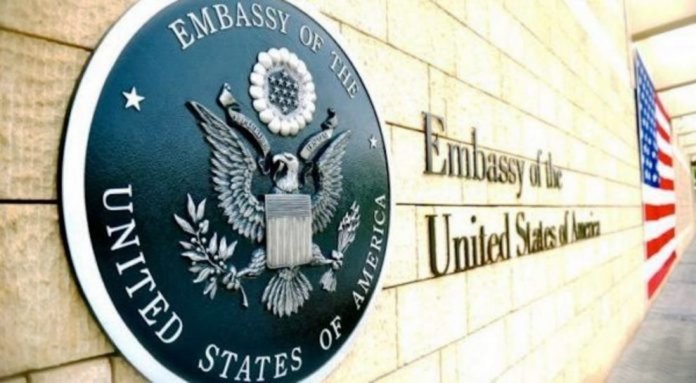
The United States Embassy in Nigeria has warned its citizens against visiting its Lagos consulate office over a planned protest of the killing of an African-American, Mr. George Floyd, by a Minneapolis police officer.

Video clips of the incident on the internet showed where a white police officer was kneeling on his neck for nearly 10 minutes.

The incident sparked off a global outrage, with people marching on various states in the US, some of which led to looting and vandalism of shops, across the country.

As a result of this, the US government has imposed a curfew on over 25 states.

The US authorities also announced investigations into the death of the deceased and that the four police officers involved in the incident have been sacked.

Some Nigerians on Tuesday protested the murder of Floyd at the US embassy in Abuja, calling for an end to racial discrimination and injustice.

The Cable reported that in an alert published on its website, the US embassy advised its citizens to be aware of their surroundings and avoid areas surrounding the US consulate office building.

“The U.S. Consulate General in Lagos has received reports that demonstrators plan to gather in front of the Consulate on Wednesday, June 03, 2020, to protest current events in the United States,” the alert read.

“Even demonstrations intended to be peaceful can turn confrontational and possibly escalate into violence.

“Avoid the areas of  Walter Carrington Crescent, the U.S. Consulate General office building, and surrounding areas. Avoid  demonstrations  and large crowds.

“Be aware of your surroundings. Monitor local media for updates. Carry proper identification, including a U.S. passport with a current Nigerian visa. Review your personal security plans. Wear a mask when in public spaces to protect yourself and others from the spread of the COVID-19 virus,” it said.


– Thisdaylive

Former first lady re-arrested for killing of husband’s ex-wife


Former Lesotho first lady Maesaiah Thabane has been re-arrested for the killing of her husband’s ex-wife, police said Wednesday.

Thabane will remain in custody until June 16, after her bail was revoked on allegations that due process was not followed during her first court appearance in February when she was charged with murder, police Commissioner Holomo Molibeli told CNN.
Molibeli said the former first lady is back behind bars on a technicality because the prosecution was not allowed to make arguments opposing her bail during the hearing.
The bail amount of 1,000 maloti ($58) was also paid long after she was released and not upon her release in February, the commissioner said.
CNN has made repeated attempts to reach Maesaiah Thabane’s lawyer but has yet to hear back. Neither she nor her husband, former Prime Minister Thomas Thabane, have spoken publicly about the allegations.
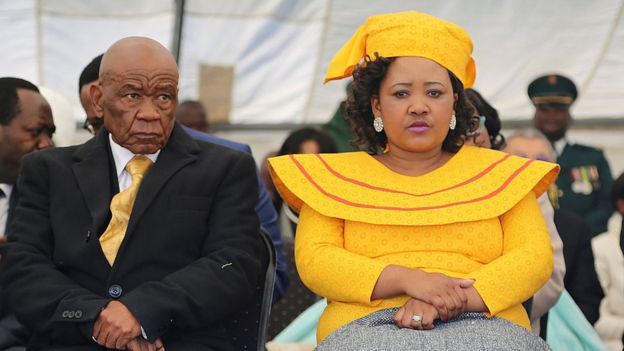
First lady Maesaiah Thabane and prime minister Thomas Thabane
Molibeli said following her re-arrest, she would appear again in court where due process would be followed.
He did not say when that would happen.  “She is in jail as we speak,” Molibeli said.
Lipolelo Thabane was shot dead two days before her estranged husband’s inauguration for a second term as prime minister.
Maesaiah Thabane was charged with ordering the killing of Lipolelo Thabane, who was shot dead near her home in Lesotho’s capital, Maseru, in June 2017.
The former first lady fled the country in January despite a police warrant for her arrest, but she turned herself in to police in February after spending weeks in South Africa.
Police questioned Thomas Thabane about the case and pushed to charge him, but his lawyers said he could not be prosecuted, citing constitutional immunity. He has not been charged in the case.
The murder case has rattled the tiny southern African nation, and it led to Thabane’s sudden retirement in May after months of pressure from his political party to resign over his alleged involvement, according to the police.
Lesotho is a country in Southern Africa.
– CNN

Apple is tracking iPhones stolen by looters


Apple is sending a clear message to people who’ve stolen iPhones from its stores: You’re “being tracked.”

The company is actively disabling the iPhones that are stolen from the displays of its retail stores, leaving them inoperable.
Screenshots of Apple’s warning message started to pop up on sites such as Twitter and Reddit earlier this week amid global protests following the death of George Floyd.
Apple stores, which recently started reopening across the United States after months of closures due to the global pandemic, reported vandalism and theft at several locations, including in New York, Philadelphia and Washington, DC.
“Please return to Apple Walnut Street,” read one message, referencing its Philadelphia location, posted to Twitter. “The device has been disabled and is being tracked. Local authorities will be alerted.”
– CNN

Nigeria’s Covid-19 total tops 11,000 with 348 new cases


Nigeria’s cumulative cases of Covid-19 climbed to 11,166 with 348 new coronavirus infections confirmed on Wednesday. Lagos continues to top states with the highest burden with 163 confirmed cases, data released by the Nigeria Centre for Disease  on Wednesday night show.

Of the new infections confirmed on Wednesday, Lagos is followed by Abuja, Ebonyi and Rivers. A total 315 people have died and another 3,329 discharged from hospital.

A breakdown of the new infections confirmed by state shows: Lagos-163 FCT-76 Ebonyi-23 Rivers-21 Delta-8 Nasarawa-8 Niger-8 Enugu-6 Bauchi-5 Edo-5 Ekiti-5 Ondo-5 Gombe-5 Benue-4 Ogun-2 Osun-1 Plateau-1 Kogi-1 Anambra-1


– Dailytrust

Why flights after COVID-19 will be ‘expensive’ – Nigerian Government


The Presidential Task Force on COVID-19 says high transport cost will characterise the Nigerian economy as the lockdown occasioned by the coronavirus pandemic becomes eased across the country.

PTF Chairman, Boss Mustapha, who stated this during a briefing in Abuja on Thursday, explained that air travel will particularly be expensive due to the need to maintain social distancing onboard.

He said, “For the transport sector, because the passenger load has been reduced now, as a result, there is a hike in the prices. That is part of the problem that the entire world will be confronted with.

“Because of COVID-19, everything is in turmoil. Flying after COVID-19 will be one of the most expensive ventures because if you are going to maintain social distancing, what happens to the capacity of the aircraft as built in such a way to accommodate about 100 passengers?

“If you maintain social distancing, the capacity might reduce to about 50%. It (the aircraft) will burn the same fuel. It will operate with the same crew. It will consume the same consumables. Who pays for the extra? So, there is going to be turmoil in the economy of the whole world, Nigeria not an exception.

“I am not urging transporters to hike their prices but it is going to be the reality of the time. And what government will have to do is what it is doing now: creating stimulus for the commerce, manufacturing, agriculture (industries) to soften the effect of this turmoil that is being brought in the management of the economy of our nation.”

The PTF on Monday asked the aviation sector to begin to develop protocols that will lead to the resumption of domestic flights any time from June 21.


– Punch

South Africa Records 3,267 COVID-19 Cases In 24 Hours


South Africa said on Thursday it had recorded 3,267 novel coronavirus cases in 24 hours, the biggest jump since the pandemic hit the country.

Africa’s biggest industrial power now has a total of 40,792 infections, the health ministry said. It saw a rise of 56 deaths for a total of 848 fatalities.

More than half of the cases are in the Western Cape region where health services are under pressure.

South Africa is the sub-Saharan African country hardest hit by the pandemic.

President Cyril Ramaphosa on March 27 ordered South Africans to observe a lockdown aimed at slowing the disease’s spread.

The move sharply limited people’s freedom of movement while slowing an economy already in recession.

But Ramaphosa has gradually eased the lockdown measures and allowed most of the economy to restart.


-AFP

Nigerian Reps reject castration as punishment for rapists


The House of Representatives has voted against a prayer seeking to recommend castration for rapists.

The House, at the plenary on Thursday, considered and adopted a motion on the rising cases of sexual violence in Nigeria.

A member, Mr James Faleke, had recommended that persons found guilty of rape should be castrated.

Just before the prayer was subjected to a voice vote, the Speaker, Femi Gbajabiamila, however, asked what would happen to an older female who rapes a younger male.

The comment generated noise in the chamber, The Punch reports.

Putting the prayer to vote, the nays had it.

In honour of victims of sexual violence in Nigeria, the House resolved that members should be dressed in black on the next legislative day.

The House is expected to sit on Tuesday.

Debate on rape and other sexual crimes lasted over two hours during Thursday’s plenary.


– Punch

Nigerian Government threatens to ban church, mosque gatherings again


As state governments  reopen  worship centres this weekend, the Federal Government  has  threatened to review the relaxation of the restriction placed on  churches and mosques, if worshippers  disregard its guidelines.

The Chairman of the Presidential Task Force on COVID-19 and Secretary to the Government of the Federation, Boss Mustapha, said this on Thursday at the task force press conference in Abuja.

He also lamented that some Nigerians, who tested positive for the virus, refused to go into isolation.

In the guidelines, the task force advises vulnerable people including those with conditions such as diabetes, cardiovascular diseases, cancer as well as people that are above 55 years to worship at home.

On Thursday, Mustapha said the task force would continue to explain the guidelines it issued to worship centres and other public places.

On the reopening of churches and mosques, he stated, “As we approach the weekend, we remind the public to be aware of the guidelines set for restricted opening of places of worship. National guidelines have been shared with the states and we expect that protocols will be agreed with religious leaders. Compliance is important so as to avoid unwanted consequences that put the lives of people at risk of contracting COVID-19. We urge utmost caution at all times.

“The PTF will continue to monitor the overall compliance to the easing of restriction as well as evolution of the outbreak. However, we will not hesitate to review as we progress, should the situation warrant, to avoid preventable risks of transmission.”

Mustapha restated that the World Health Organization had resumed the clinical trial of hydroxychloroquine, which it suspended on May 25.


– Punch

COVID-19: Nigerians rejecting isolation – Government


The Chairman of the Presidential Task Force on COVID-19 and Secretary to the Government of the Federation, Boss Mustapha on Thursday lamented that some Nigerians, who tested positive for the virus, refused to go into isolation.

Calling for the cooperation of all Nigerians, the SGF stated, “We have received reports about citizens refusing to help with contact tracing as well as going into isolation after testing positive. It is in the interest of everybody that contacts are traced so as to slow down the spread.

“It is also in our interest to go into isolation facilities for close monitoring. A number of fatalities have been recorded due to change in the condition of patients while staying outside the isolation facilities.”

On his part, the Minister of Health, Dr Osagie Ehanire, said the Federal Government was disturbed by COVID-19 patients, who were fleeing isolation centres. This, he said, had worsened the transmission of the virus in communities.

The health minister said government had problems in trying to convince some COVID-19 positive people that they had the virus.

He said,  “We also have issues with people who test positive and think you are going to look for them and then they run. So the figures don’t tally because people who think you are going to trace them don’t want to go into isolation.”


– Punch

Featured Post

Gov Yusuf Assents To Bill Reversing Creation Of Kano Emirates Created By Ganduje

  Gov Yusuf Assents To Bill Reversing Creation Of Kano Emirates Created By Ganduje The governor also reinstated the 14th Emir of Kano, Muham...